Kazakhstan Has Closed to International Surrogacy: What the Law Actually Says


As of 26 July 2026, international intended parents can no longer enter into a surrogacy agreement in Kazakhstan.
Not "restricted." Not "harder." Closed.
If Kazakhstan was on your shortlist, or if you had already started a programme there, this article is for you. I want to walk you through what the legislation actually changed, because most of the coverage so far has been imprecise about that - who it affects, what is still genuinely unresolved, and what I would do next in your position.
Background on the country, including how programmes ran before this, is on our Surrogacy in Kazakhstan page, now updated.
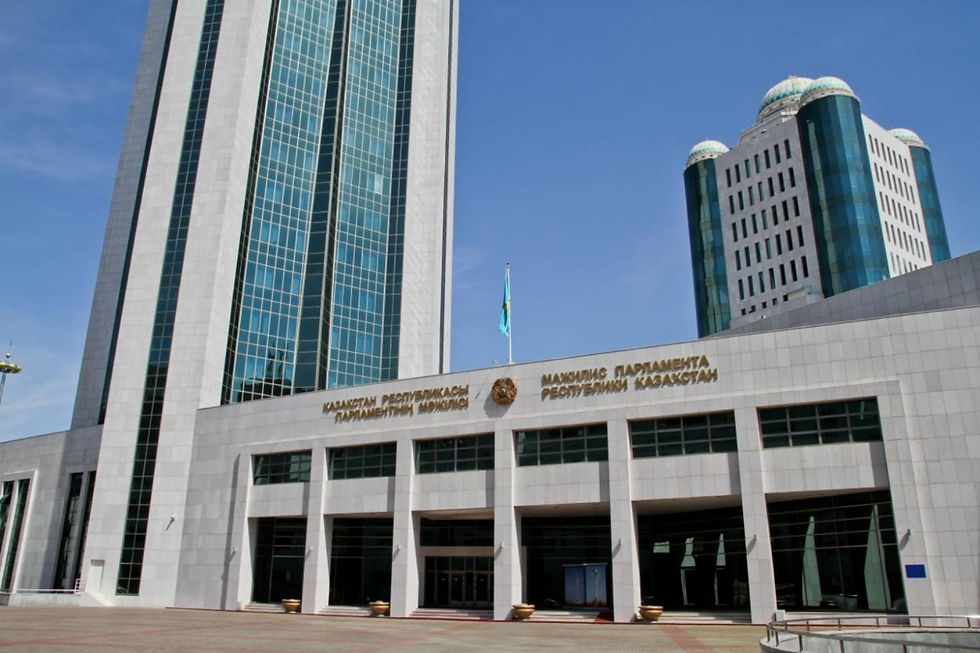
What the law actually did
On 14 July 2026, President Kassym-Jomart Tokayev signed Law of the Republic of Kazakhstan No. 350-VIII. The full text was published in Kazakhstanskaya Pravda, Kazakhstan's official publication outlet, on 15 July 2026.
The law makes three changes to the Code of the Republic of Kazakhstan No. 518-IV of 26 December 2011, "On Marriage (Matrimony) and the Family". The Code is on the state legal information system Ädilet and in the Paragraph database, where it now shows as current to 26 July 2026:
One. The definition of surrogacy in Article 1 was amended to specify that the persons involved must be citizens of Kazakhstan.
Two. In Article 54 (Surrogacy Agreement), paragraph 1 was amended so that the agreement is concluded by citizens of Kazakhstan who are married. A new paragraph 1-1 was then added, stating outright that only citizens of Kazakhstan who are married to each other may commission surrogacy services.
Three. Article 57, which sets out the obligations of the commissioning parents, was restated to describe them as spouses who are citizens of Kazakhstan.
The part most coverage has got wrong
You will see this reported as though Kazakhstan has just introduced a marriage requirement. It hasn't. The requirement that commissioning parents be a married couple was already in Kazakh law before this. Article 57 already spoke of spouses.
What is new is citizenship. That is the entire mechanism of the closure, and it is worth being precise about, because it tells you something about how these things happen.
So the position as of 26 July 2026:
Foreign intended parents are excluded. This is the change.
Single people, of any nationality, still excluded, as before.
Unmarried couples, including Kazakh nationals, still excluded, as before.
Same-sex couples, still excluded, since Kazakh law defines marriage as between a man and a woman.
The door didn't narrow for everyone. It closed for one group specifically, and stayed shut for the others.

Who this actually hits
Kazakhstan never had the profile of Georgia or Ukraine. It rarely came up in English-language forums or on "top destinations" lists.
But it had become a serious option for a specific group. Over recent years a growing number of intended parents from China were pursuing programmes there, for practical reasons rather than glamorous ones: geographical proximity, a codified legal framework in a region where codified frameworks are not a given, experienced IVF clinics, and costs well below North America.
For those families this is not a redistribution of options. For many it was the option, and it is gone.
Intended parents from elsewhere are affected too, particularly those who chose Kazakhstan precisely because it had a written law rather than a grey zone. That was the appeal. It is also, as it turns out, exactly what made it possible to close so cleanly. A country that regulates surrogacy by statute can restrict it by statute, in a single clause, inside a bill about something else.

If you are mid-journey in Kazakhstan
Let me be very direct here, because this is where I have seen the most reassurance offered with the least evidence behind it.
The amendments govern who may enter into a surrogacy agreement from 26 July 2026. The published transitional provisions of Law No. 350-VIII do not address surrogacy agreements concluded before that date. They deal with other matters entirely - council chairs, procedural codes, commencement dates for other clauses.
That silence is not the same as protection, and it is not the same as invalidation. It means the question is open, and it will be answered by how Kazakh registrars, clinics and courts actually apply the amended Code.
So if you have a signed contract, an ongoing pregnancy, or embryos in storage in Kazakhstan, do three things this week:
Ask your agency or clinic, in writing, for their legal position, with a specific reference to what they are relying on. Not a phone call. Not a WhatsApp message.
Get an independent opinion from a Kazakh family lawyer with no connection to your agency or clinic. If your agency discourages this, treat that as information about your agency.
Check your home country's position separately. Whether Kazakhstan permits the arrangement and whether your own country will recognise you as the parent are two different legal questions, and the second does not resolve itself.
If the answer you get is a version of "don't worry, it will be fine," you don't have an answer. You have a sentence.
If you want an independent read on where you stand, get in touch. I don't run programmes and I don't represent agencies, so I have nothing to protect by telling you it's fine.

The consequence nobody is discussing
There is a second effect here, and it sits on the other side of the arrangement.
Kazakh women have for several years worked as surrogates not only inside Kazakhstan but in programmes abroad. Agencies and clinics operating in Albania, Armenia, Georgia and Northern Cyprus have recruited from Kazakhstan - women with prior experience of assisted reproduction, willing to travel, reachable through established networks.
Closing the domestic market does not dismantle those networks. It removes the domestic work.
Whether that means more Kazakh women travelling for programmes elsewhere, I don't know. Nobody does yet. It is speculation, and I would rather say so than dress a guess up as analysis.
But hold onto why it matters to you. Cross-border surrogate recruitment adds layers: language, immigration status, medical follow-up after birth, and the question of who is actually responsible for a woman's care when she is a long way from home. Those layers are manageable when handled properly. They are also where things go badly wrong when they aren't.
If you are looking at a programme in one of those countries, ask where the surrogates are recruited from, and how the agency supports a surrogate who isn't a local resident. A good agency answers that without flinching.

Where demand goes now
Expect redistribution rather than any real drop in international surrogacy.
Countries still open to international intended parents will likely see more enquiries from people who had Kazakhstan on their list, most of all destinations with an established framework and a clear parentage pathway, since that is what this group was looking for. In practice that tends to mean Georgia, Armenia, Albania, Ghana, Colombia, Mexico, and at a very different price point, the USA.
Those are not interchangeable. Which one fits depends on your marital status, your sexual orientation, your genetic contribution, your budget, and above all your own country's recognition rules.
One caution about what usually follows a closure. Marketing in the remaining destinations gets louder. Waiting times get quoted more optimistically. Agencies discover capacity they didn't have last month. None of that improves a country's law or a clinic's success rates. Choose on the criteria you would have used last year.
The wider lesson
Kazakhstan is not an isolated case. Greece also tightened residency requirements. Argentina's position shifted after the courts intervened. Ukraine has draft legislation under discussion that would restrict access for foreign nationals.
The pattern is consistent enough to plan around: a country open today may not be open in a year, and closures rarely come with notice. This one came with twelve days, buried in a local-government bill.
So when you assess a destination, don't only ask whether it's legal right now. Ask:
How stable is this framework, and when did it last change?
Is surrogacy written into statute, or does it rest on practice, tolerance, or a single ruling?
Is there political or public pressure building around it?
What is my exposure if the law changes mid-programme, financially, and for the pregnancy?
What is my exit route, and what happens to my embryos?
And always, separately: what does my own country require in order to recognise me as the parent and let me bring my child home? A perfect destination law is worth very little if the route home doesn't work.
On that last point, the High Court guidance for parents planning international surrogacy published by NGA Law is worth your time. It was issued in an English case, but the questions it sets out are the right ones in any jurisdiction.

Where this leaves you
If Kazakhstan was your plan, you are not out of options. You need a different one, chosen carefully rather than quickly.
That is harder than it sounds right now, because the moment a destination closes is exactly when the information online is least reliable. You will find pages still listing Kazakhstan as open. You will find agencies happy to move you elsewhere without asking whether it suits your situation. And you will find confident answers to questions that don't yet have confident answers.
If you are sitting with this news and don't know where to go next, book a Free Discovery Session.
30 minutes. No cost. No sales pitch.
You'll leave with:
A clearer understanding of which countries may or may not work in your case
Awareness of common risks and the early red flags worth avoiding
A calm, expert voice to walk through your next steps
You'll also receive a short written summary afterwards, covering your current stage, the countries we discussed, and the key notes from our conversation.
It is built for first-timers, for people deep in research and overwhelmed by it, and for anyone who has been burned by confusing or contradictory information online.
Book your free clarity call. Find your path, without pressure.
If you would rather have structured support than a single conversation, you can see the full range of guidance packages here.
Written by Olga Pysana, independent international surrogacy consultant and founder of The Surrogacy Insider. I work exclusively for intended parents. I am not an agency, I do not represent surrogates, and I do not run surrogacy programmes.
This article is for general information and does not constitute legal advice. It reflects the text of Law No. 350-VIII as published on 15 July 2026. Surrogacy and parentage laws change frequently and vary by individual circumstances. Anyone considering international surrogacy should take qualified legal advice in both the destination country and their country of residence before making decisions or payments.


